503 991 5453
July and the IRS: what every self-employed person and business owner should review mid-year

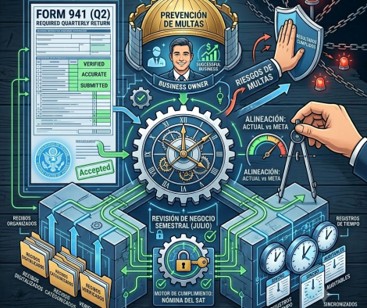
For many self-employed people and small business owners, July may feel like a quiet month compared to tax season. But if you have employees, run payroll, receive contractor income, or manage a business with changing cash flow, July can be one of the most important months of the year.
Why? Because July marks the middle of the year, and it is also when many employers need to review second-quarter payroll responsibilities, especially Form 941. The IRS states that Form 941 is generally filed quarterly and is usually due by the last day of the month following the end of the quarter. For the second quarter, that usually means July 31.
1. Why July matters for your business
July matters because it gives you a chance to review your business before the year is almost over. Many business owners wait until December or tax season to look at their income, expenses, payroll records, and receipts. By then, fixing mistakes can be much harder.
By mid-year, you can already review:
- how much your business has earned;
- how much you have spent;
- whether your receipts are complete;
- whether payroll payments are properly recorded;
- whether your estimated tax payments need adjustment;
- whether personal and business money are clearly separated.
This is especially important for businesses with variable income, such as construction, restaurants, cleaning, landscaping, and service-based businesses.
2. If you have employees, review Form 941
One of the most important July responsibilities for employers is Form 941, Employer’s Quarterly Federal Tax Return. Employers use this form to report wages, federal income tax withheld, Social Security tax, and Medicare tax. According to the IRS, employers who withhold federal income tax, Social Security, or Medicare taxes generally must file Form 941 each quarter.
In simple terms: if you have employees and run payroll, paying your workers is not the only responsibility. You also need to report payroll taxes correctly.
Second-quarter Form 941 usually covers wages paid during April, May, and June. That is why July is the time to make sure the quarter is complete and accurate.
Before reviewing or filing Form 941, check:
- wages paid;
- taxes withheld;
- federal tax deposits;
- number of employees;
- payroll reports;
- pay dates;
- deposit confirmations.
A common mistake is thinking that if money left the bank account, everything is fine. But the IRS also cares about whether payroll was reported correctly and on time.
3. Payroll mistakes are not always about paying late
When people think about payroll problems, they often think only about late payments. But there are other common payroll mistakes that can create confusion. For example:
- paying workers without clear records;
- not saving payroll reports;
- losing deposit confirmations;
- mixing employees and contractors;
- confusing W-2 employees with 1099 contractors;
- not matching reported amounts with actual deposits.
In construction and restaurant businesses, this can happen easily. Workers may change often, hours may vary, tips may be involved, and temporary help may come and go. Without a clear system, the end of the quarter becomes stressful.
That is why July should not be treated as just another month. It should be treated as a payroll review month.
4. Self-employed? July still matters
Not every self-employed person has employees. Many work alone, receive 1099 income, operate a single-member LLC, or work as independent contractors. In those cases, Form 941 may not apply, but July is still important.
The IRS explains that self-employed individuals generally file an annual income tax return and pay estimated taxes quarterly.
This means that if taxes are not automatically withheld from your income, you may need to make payments throughout the year instead of waiting until tax season.
Even though the June estimated payment deadline has already passed, July is a great time to review whether that payment was enough and prepare for the next one. The IRS estimated tax calendar generally includes payment deadlines of April 15, June 15, September 15, and January 15 of the following year.
5. The mistake of waiting until tax season
One of the most expensive mistakes business owners make is saying: “I’ll check it when I file my taxes.”
The problem is that by tax season, many things are harder to fix. If receipts are missing, if business and personal accounts are mixed, if estimated payments were skipped, or if payroll reports are incomplete, the process becomes more complicated.
Waiting until the end of the year can lead to:
- stress;
- unexpected tax balances;
- penalties;
- missed deductions;
- incomplete reports;
- rushed decisions.
July is a prevention month. It is like checking your car before it breaks down. You do not wait until the problem becomes serious. You will review it early.
6. Review your receipts before they disappear
Many small businesses lose money not because they do not work hard, but because they do not keep records. A missing receipt can become a missed deduction. Many small missing deductions can add up by the end of the year.
In July, review whether you have organized:
- material receipts;
- supplier invoices;
- bank statements;
- rent payments;
- insurance payments;
- gas and business mileage;
- equipment purchases;
- contractor payments;
- payroll reports;
- IRS payment confirmations.
For construction businesses, this is especially important. Materials, tools, equipment, fuel, subcontractors, and job-related expenses can easily get mixed together.
For restaurants, it is also important to review inventory purchases, payroll, tips, utility bills, repairs, rent, delivery platforms, and operating expenses.
7. Do not mix personal and business money
This may sound basic, but it is one of the most common mistakes. Many business owners use the same account for everything: customer deposits, personal purchases, materials, food, gas, family transfers, and business payments.
When that happens, it becomes difficult to know how much the business actually earned.
It also becomes harder to identify which expenses were personal and which were business-related. If records are incomplete or unclear, the confusion can create problems later.
A simple structure can help:
- one bank account for the business;
- one card for business expenses;
- digital folders by month;
- saved receipts;
- regular reviews.
The goal is not perfection from day one. The goal is to start building order.
8. July is also a good time to ask for help
Many self-employed people start by doing everything themselves. At the beginning, a notebook, an app, or a spreadsheet may be enough. But as the business grows, responsibilities grow too.
It may be time to ask for help if:
- you have employees;
- you run payroll;
- you receive many customer payments;
- you manage several jobs at the same time;
- you do not know your real profit;
- you mix personal and business accounts;
- you are worried about owing too much at the end of the year;
- you are not sure if estimated payments are enough;
- you cannot find receipts;
- you received a letter from the IRS.
Asking for help does not mean you failed. It means your business needs more structure.
9. July checklist for business owners
Here is a simple July checklist:
- Review income from January through June.
- Review business expenses.
- Organize receipts by month.
- Check bank statements.
- Confirm payroll payments.
- Review whether Form 941 applies.
- Save IRS deposit confirmations.
- Review estimated tax payments already made.
- Adjust your plan for September.
- Schedule a review if you are unsure.
This checklist can help catch problems early.
Conclusion: July is the month to correct things on time
July is not just the middle of the year. For many businesses, it is a chance to get organized, review payroll, prepare Form 941, organize receipts, and adjust estimated tax payments.
The goal is not to make business more complicated. The goal is to give you more clarity, more control, and fewer surprises at the end of the year.
If you are self-employed, own an LLC, work as a contractor, run a restaurant, cleaning business, landscaping company, or construction business, July is a good time to review your numbers.
At Grupo Contable, we can help you organize your information, review your responsibilities, and create a clearer plan for your business.